
Cuchlaine King Symposium 2025
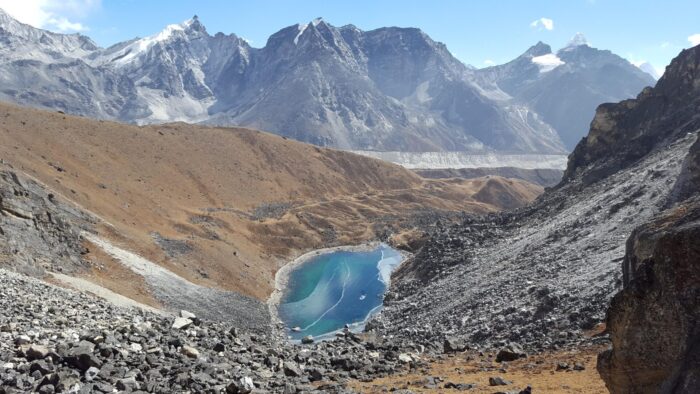 50 years of change in geomorphic systems : celebrating the 50th volume of Earth Surface Processes and Landforms
In 1976, the year in which Earth Surface Processes and Landforms (ESPL) was first published, the wider geosciences community was presented with a seminal paper that emphasized how relatively small changes in astronomically-driven solar forcing could, through feedbacks, drive major climate change (Hays et al., 1976). This year was also in the middle of a period of rapid rethinking of the relationships between humans and climate, away from discussions regarding an impending Ice Age and towards the first recognition that human activities can cause rapid global warming. At around the time ESPL (then ESP) was accepting its first submissions, Manabe and Wetherald (1975) published the first 3D global model, predicting that for a doubling of atmospheric CO2 would lead to a 2oC increase in temperature. We know today that their predictions were remarkably accurate for such an early model.
But what does this mean for geomorphology?
Over this 50 year period, geomorphology has also come to recognize the extent to which humans now impact Earth surface processes and the landforms they shape. Studies of human impacts on coastal processes, soil erosion, aeolian sediment production and transport, river form and process, are all now routinely found in the journal. Geomorphology has perhaps been more reticent in thinking through how rapid climate change might influence geomorphic processes, a point we made in an Editorial more than 10 years ago (Lane, 2013). One of the hypotheses for such reticence follows from the dominant but local impacts of human activities, ones readily measured at the relatively small spatial-scales and often relatively short timescales, palaeo studies aside, that allow geomorphological fieldwork. The scaling-up of such measurements to global-scale signals, characteristic of other kinds of climate change impact studies, is challenging due to data availability; the difficulty of separating local signals from larger-scale signals; the confounding effects of direct human activities upon climate change signals; and the technical challenges for numerical models that must represent highly non-linear systems, dominated by feedbacks.
As ESPL arrives at its 50th volume, this is changing.
The era of “big data” is reflected in radical developments of high-resolution measurement systems and equally novel ways of harnessing artificial intelligence to access and to analyse the massive volumes of global data now available. At ESPL’s 50th birthday we may be at the cusp of a revolution in our ability to contribute to global debates regarding how human activities are impacting Earth surface processes over decadal timescales because we can both measure and model geomorphic systems across larger spatial-scales and over longer time-periods. This revolution is not just about measuring today or reconstructing change over the last 50 years. It is also but also about being able to separate the changes we are seeing today from natural variability in the past as revealed itself by new ways in which we can reconstruct geomorphological processes extending back into times before humans were significantly modifying their environment.
To celebrate the 50th anniversary, ESPL will return to the home of its founding years at the University of Leeds in the UK. There, the British Geomorphological Society’s Cuchlaine Symposium will be dedicated to the ways in which human activities, direct and indirect, are driving changes in Earth surface processes and the landforms that they create, often beyond what is found in the historical record. The symposium will be based around a small number of invited speakers who are contributing to key topics in this field. A longer-than-normal poster session will be combined with “pop-up” poster introductions to encourage exchange between researchers on this theme.
This is the first call for abstracts for the symposium and we are particularly keen to attract submissions from across the field of geomorphology that address the following topics ;
- Quantification of geomorphic change at the annual to decadal time-scales
- Big data and the synthesis of geomorphic impacts at scales beyond the local
- Separating climate change impacts from direct human impacts on Earth surface processes and landforms as far as this is possible
- Situating the last 50 years of Earth surface process rates and changes in the longer-term historical record
- Numerical predictions of how Earth surface processes and landforms might evolve over the next half century.
All accepted abstracts will be eligible to submit their papers to a special issue of Earth Surface Processes and Landforms.
References
Hays, J.D., Imbrie, J. and Shackleton, N.J., 1976. Variations in the Earth's Orbit: Pacemaker of the Ice Ages. Science, 194, 1121–113
Lane, S.N. 2013. 21st century climate change: where has all the geomorphology gone?. Earth Surface Processes and Landforms, 38, 106-110
Manabe S. and Wetherald, R.T., 1975. The Effects of Doubling the CO2 Concentration on the Climate of a General Circulation Model. Journal of the Atmospheric Sciences, 32, 3–15