
Research Student Spotlight October 2026: Lauren Geiser
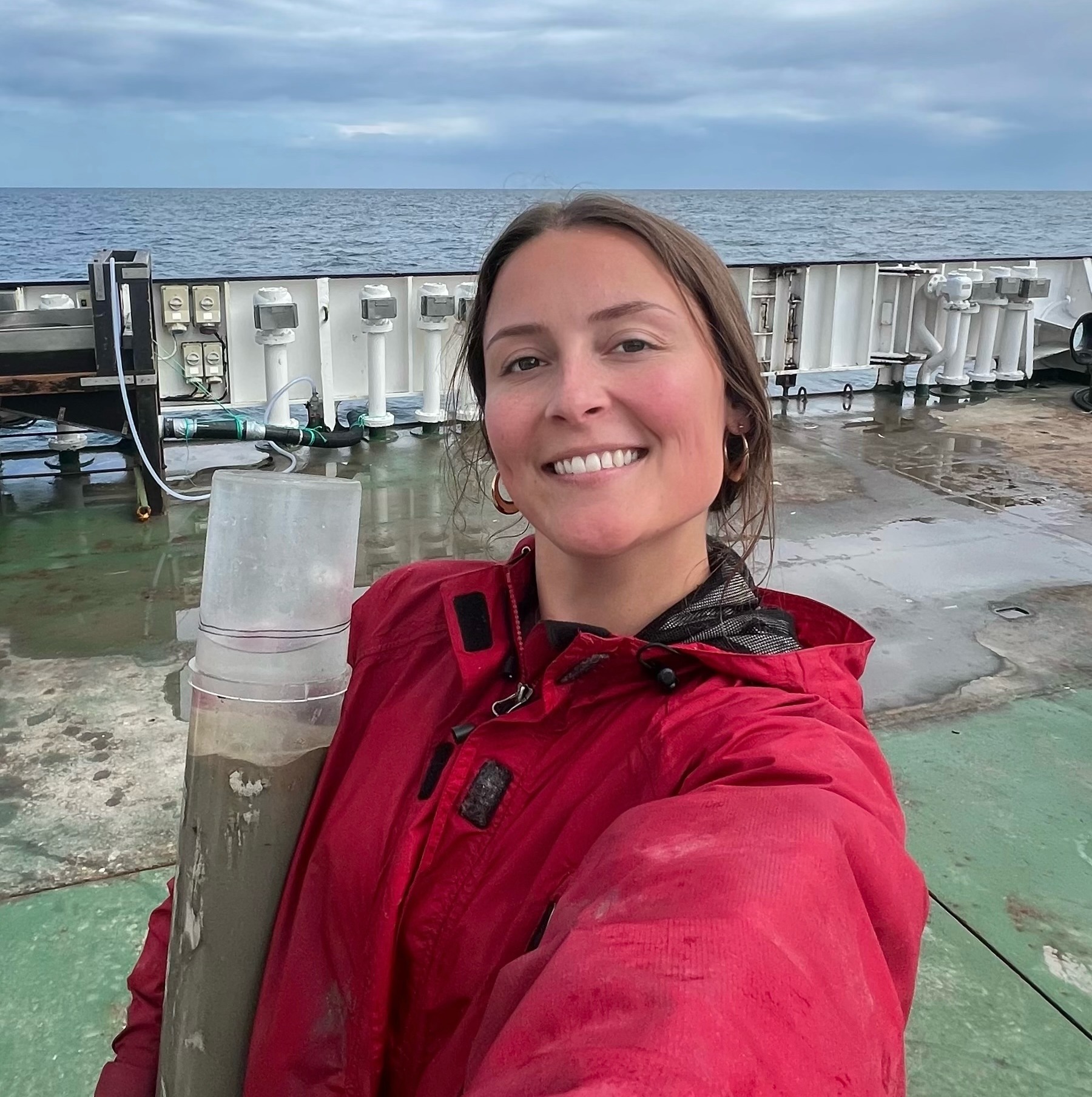
Welcome to our monthly spotlight on the work and lives of the next generation of water@leeds researchers.
October's spotlight is: Lauren Geiser
PhD title: Exploring the shell microstructure, growth, and phylogeny of deep-sea bivalves from the abyssal Clarion-Clipperton Zone (equatorial Eastern Pacific)
School of Earth, Environment, and Sustainability
Supervisors: Crispin Little (SEES), Adrian Glover (NHM London), Clare Woulds (SOG)
Tell us a bit about yourself:
I grew up in northwest Ohio in the USA, far away from the ocean! When I started university, I wasn't sure exactly what career path I wanted to pursue, so I chose a broad education that would keep my options open. I completed a double major in Biology and Mathematics, along with a minor in Chemistry at the University of Dayton. After graduating, I spent a year working on a sustainable farm in an ecovillage and in a paediatric cancer research laboratory before moving to Scotland. There I completed an MSc in Sustainability and Environmental Modelling at the University of Dundee. During this, I discovered my interest in deep-sea marine science, particularly understanding and protecting these ecosystems from human impacts. This passion ultimately led me to pursue a PhD.
Why did you choose University of Leeds?
I chose the University of Leeds because of its friendly and supportive environment. I was also particularly drawn to this PhD project, which combines my interests in the deep-sea, using marine shells as archives of environmental and biological information, and the impacts of human activities on marine ecosystems. In addition, Leeds has strong collaborations with leading research organisations, including the Natural History Museum in London and the National Oceanography Centre in Southampton. These partnerships have provided excellent opportunities to work alongside experts in the field and contribute to impactful research!
What is your research about?
My research focuses on tiny deep-sea bivalve molluscs from the Clarion-Clipperton Zone, a region in the Pacific Ocean that is being targeted for the deep-sea mining of polymetallic nodules. Many of these bivalve species have only recently been discovered, so we still know very little about their biology and ecology. To help fill these knowledge gaps, I study their growth patterns using sclerochronology, which is similar to reading tree rings to understand their life history. I also investigate their calcium carbonate shell microstructures to better understand how these animals build their shells. In addition, I use DNA barcoding to explore their evolutionary relationships and improve our understanding of their taxonomy. Together, this research helps build a clearer picture of deep-sea mollusc biodiversity, and provides important baseline information for assessing the potential impacts of deep-sea mining.
What did you wish you knew before starting a PhD?
One thing I wish I had known before starting a PhD is just how supportive the academic community can be. There are so many people around you who genuinely want to help and see you succeed, whether that's your supervisors, fellow students, or other researchers from different institutions. There are also so many great opportunities beyond just your research, from training courses and conferences to research cruises and international collaborations. My advice would be to take advantage of these opportunities whenever you can, as they can be some of the most rewarding parts of the PhD experience!
Connect with Lauren: