
Research Student Spotlight September 2026: Emmanuel Erhijodo
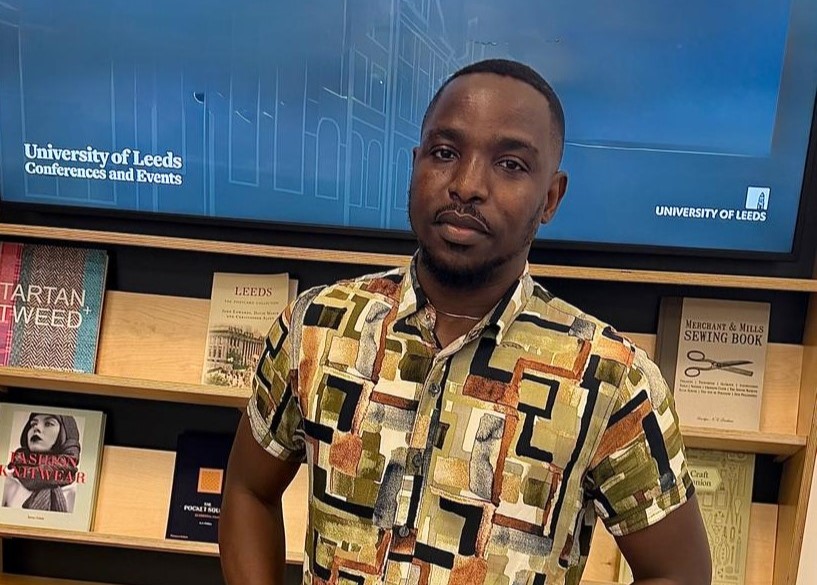
Welcome to our monthly spotlight on the work and lives of the next generation of water@leeds researchers.
September's spotlight is: Emmanuel Erhijodo
PhD title: Eco-spiritual Trauma and Ecological Justice: A Literary and Ethnographic Study of Eco-spirituality in Niger Delta Poetry
School of Philosophy, Religion and History of Science in the Faculty of Arts, Humanities and Cultures
Supervisors: Prof. Adriaan van Klinken, Dr Brendon Nicholls
Tell us a bit about yourself:
I grew up in Warri, a culturally diverse and ecologically challenged city in South-South Nigeria. From an early age, I was exposed to the environmental crisis affecting the area, particularly the recurring incidents of oil spillages associated with crude oil extraction. As a child, I developed an interest in the literary works of Niger Delta poets and writers such as Gabriel Okara, Ken Saro-Wiwa and Tanure Ojaide, who used their creative works to advocate against oil pollution in the region. Influenced by their writing, I went on to pursue a research pathway in literature, with a particular interest in ecocriticism. Before coming to the University of Leeds to study for a PhD, I was an adjunct tutor at the University of Ibadan where I taught literary appreciation.
Why did you choose University of Leeds?
I had always imagined studying at the University of Leeds, even as a child. During my primary school days, I had this fantasy of studying English at Leeds, largely because Wole Soyinka, Africa’s first Nobel Laureate in Literature, studied at the School of English at Leeds. So, growing up, the University was always on my radar. My interest grew further because of the reputation of the Leeds University Centre for African Studies (LUCAS), the Centre for Religion and Public Life (CRPL), and the Environmental Humanities Research Group in the School of English, all of which bring together renowned and resourceful scholars. This, coupled with the University’s expertise in interdisciplinary research, made Leeds an ideal place to undertake my PhD research.
What is your research about?
My research explores the eco-spiritual trauma caused by the pollution of sacred rivers in the Niger Delta. Aiming to make an original contribution to interdisciplinary scholarship on ecology, religion and literature, my research examines the eco-spiritual trauma experienced by local communities as a result of the pollution of water bodies, particularly rivers and creeks that are believed to be dwelling places of spirits and deities. So, using poetry and ethnographic data, my study examines how the release of toxic waste into sacred rivers and creeks contributes to collective trauma in the affected communities. I deploy an innovative methodology, ethnopoetic mediation, to bring together poetry and lived narratives in engaging the complexities of oil pollution and its eco-spiritual implications for indigenous religious lifeworlds in the communities.
What did you wish you knew before starting a PhD?
I had thought my PhD would be a linear journey and that, if I set “realistic goals,” everything would progress accordingly. I now realise that research can sometimes take on a form of its own, and that I must be willing to adapt along the way. I have also learnt that progress can take different forms, and that what may initially seem like a setback can sometimes point you in the right direction.
Connect with Emmanuel on LinkedIn.